K–12 Education Trends in India 2026 A Parent’s Guide
Sep 28, 2026
Good marks tell only part of your child’s learning story. Explore K–12 education trends in India for 2026 and what they mean for raising curious, confident and independent learners.
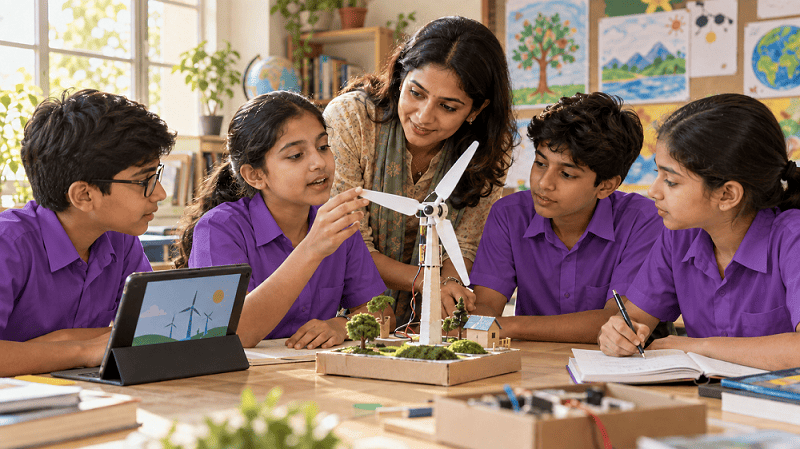
A child can complete a worksheet correctly and still struggle to explain how they arrived at the answer. Another may take longer, ask several questions and eventually work out a method they can use again. A report card rarely tells you the whole story.
That’s a useful starting point for understanding K–12 education trends in India in 2026. Parents need to look at what children understand, how they handle unfamiliar problems and whether they feel comfortable asking for help. Here’s how to recognise learning that supports those abilities, both at school and at home.
Start with what your child can explain and apply
Strong academic foundations remain essential. Reading confidently, working with numbers and writing clearly give children the tools to explore almost every other subject. The question is how deeply they understand what they’re learning.
India’s National Education Policy 2020 calls for greater emphasis on conceptual understanding, experiential learning and broader development. These are continuing priorities, rather than changes that began only in 2026.
For parents, the most useful evidence is often ordinary classroom work. Can your child explain a science observation? Can they use a maths concept in a slightly different problem? What happens when their first answer doesn’t work?
Turn everyday situations into small investigations
Experiential learning connects an idea with something a child can observe or do. For example, measuring ingredients can make fractions easier to understand. Growing two plants under different conditions can raise questions about light, water, and fair comparisons.
The activity needs a little reflection to become a useful lesson. Ask, “What did you notice?” or “What would you change next time?” Give your child time to answer before offering your own explanation.
The same principle applies to school projects. A simple model that a child can discuss thoughtfully tells you more than an elaborate display made mostly by an adult.
Look for technology that serves a clear learning purpose
AI in education and personalised learning often appear together in conversations about school improvement. They’re related, but they aren’t interchangeable. Personalised support can come from a teacher who notices a misunderstanding, even without an app.
A useful digital tool might offer extra practice on one concept, show a process through animation or help a teacher spot recurring mistakes. Its value depends on what the child learns from using it.
Keep AI use thoughtful and age-appropriate
AI-generated explanations can sound convincing even when they contain errors. Children need guidance on checking information, protecting personal details and doing their own thinking. UNESCO’s guidance on generative AI in education emphasises human oversight, privacy and age-appropriate use.
Ask a school how teachers supervise AI-assisted work and how they distinguish genuine understanding from a copied response. At home, follow the school’s rules and the tool’s age requirements. For permitted use, an older student might compare an AI explanation with a textbook and identify what needs correcting.
The aim is to develop judgement alongside digital confidence. Getting an answer quickly isn’t the same as understanding it.
Match support to the difficulty
A child who struggles with a word problem may understand the calculation but find the language confusing. Another may need more practice with the underlying number concept. Giving both children an identical set of extra questions may miss the problem.
Ask teachers what they’ve noticed and what kind of support they suggest. Personalised learning should respond to current needs and progress, rather than place children into fixed categories such as “visual learners”.
Make room for skills that take practice
Communication, collaboration and decision-making develop through repeated opportunities to use them. A timetable full of activities doesn’t automatically provide that practice; children need meaningful roles and helpful feedback.
In a group project, for instance, a student might explain an idea, listen to a disagreement and revise the plan. A sports match can offer practice in handling disappointment. Rehearsing a play requires preparation and attention to other performers.
Let interests grow without filling every afternoon
Holistic development in schools brings academic learning together with physical activity, creativity, values and emotional well-being. It shouldn’t become another race to collect certificates.
Give your child room to try an activity, decide what they enjoy and stay with it long enough to make progress. An initially hesitant child may need encouragement, but an overcrowded routine can leave little space for rest or independent play.
Notice the smaller gains too: speaking up during a discussion, asking a teammate for help or returning to a difficult task after a setback.
Build the habit of learning something new
No parent can map a child’s entire working life. Technology and changing circumstances can alter the skills people need, which makes willingness to learn a practical strength.
You can model that habit in simple ways. Learn a new recipe together, repair something with instructions or admit when you need to look up an answer. Let children see that adults revise their understanding too.
For older students, a useful question after a project is, “What would you need to learn before attempting a harder version?” It shifts attention towards the next step they can take.
Broaden your child’s world while helping them feel included
Global awareness can begin with a book, a classroom discussion or a comparison of how communities respond to the same problem. International exchanges and online collaborations can add to that experience when available, but travel isn’t a prerequisite.
For example, students could investigate water use in their neighbourhood and compare it with life in a place where water is scarce. The learning comes from asking careful questions and considering another perspective.
A wider outlook also belongs inside the classroom. Children should have opportunities to learn alongside peers with different backgrounds, abilities and support needs.
Ask how participation works in practice
An inclusive school needs practical ways to help students take part. During a visit, ask how teachers adapt tasks, support a child who is falling behind and respond when someone is left out.
At home, encourage respectful questions about differences. If your child describes a classmate as “slow”, talk about the fact that people may need different amounts or kinds of help. The way adults respond to these moments can shape how children treat one another.
Use school conversations to agree on the next step
Parents and teachers see different parts of a child’s day. Bringing those observations together can make support more specific.
Instead of asking only, “How are the marks?”, try questions such as:
- Which concept is my child finding difficult at the moment?
- Do they ask for help when they’re unsure?
- How do they contribute during group work?
- What is one manageable thing we can practise at home?
- When should we review whether that support is helping?
Keep the home routine realistic. A short reading habit, regular sleep and a calm conversation about school can be more sustainable than adding another demanding study session.
If your child seems repeatedly worried about school, share what you’ve noticed with the teacher. Academic progress and emotional well-being belong in the same conversation.
Compare schools through everyday evidence
When you visit a campus, connect the school’s promises with specific examples. “Future-ready learning” becomes much clearer when a teacher shows you how a lesson works.
Use this checklist to guide the conversation:
• Ask to see student work that includes explanation, revision or reflection.
• Find out how teachers balance subject knowledge with practical activities.
• Ask what digital tools are used for and how students are supervised.
• Check how sports, arts and student responsibilities fit into the regular timetable.
• Discuss support for different learning needs and concerns about well-being.
• Find out how parents receive feedback and raise questions.
At JM International School, the educational approach brings together academics, experiential learning, technology-supported teaching, co-curricular participation and values. For families exploring JM International School, Greater Noida West, a school visit offers a chance to ask how that approach looks in their child’s class.
Ask for examples suited to your child’s age and interests. A young learner’s needs will differ from those of a student preparing for senior classes.
Questions parents often ask
What are the main K–12 education trends in India in 2026?
Key areas to understand include conceptual and practical learning, responsible AI use, personalised support, life skills, inclusion and student well-being. Global awareness and closer communication between families and teachers also matter. These priorities won’t look identical in every school or classroom.
How does NEP 2020 relate to everyday learning?
NEP 2020 encourages understanding, inquiry and learning through experience alongside broader student development. [1] Parents can ask schools for classroom examples, such as an investigation, discussion or project that helps students apply a subject concept.
Does future-ready education mean more screen time?
No. It includes learning to reason, communicate, adapt and work with others. Technology can support those goals, but practical activities, reading, sport and face-to-face discussion also have a place. Ask what a digital activity helps children understand before judging it by its novelty.
How can parents encourage independent learning?
Let your child attempt a task before stepping in. Ask them to explain where they’re stuck, help them identify a next step and praise specific effort or improvement. Offer support without taking over the work.
Choose a learning environment you can understand
You don’t need to chase every new educational term. Look for a school where teachers can explain how children learn, show how they respond to difficulties and make room for interests beyond examinations.
At home, begin with one small change: ask your child to explain something they discovered today. Their answer may tell you more than a completed homework page.
If you’re considering JM International School, Greater Noida West, contact school to arrange a visit and discuss your child’s learning needs. Take your questions along and use the conversation to decide whether the environment feels right for your family.